
FIELD NOTES / HONEYCOMB
How to Estimate Aluminum Honeycomb Panel Weight
Calculate sheet weight from area and verified mass per square meter, then build a separate shipping estimate.
Pick the right weight figure
Ask for the mass per square meter of the actual panel build-up. Overall thickness alone does not identify weight. The face sheets, core, bond and coating all contribute, and two panels of the same depth can use different skins. Check whether the quoted figure covers a bare flat sheet or a finished assembly. Record the source and revision in the takeoff so a later change to the skin or core does not silently invalidate the estimate.
Calculate the flat panel quantity
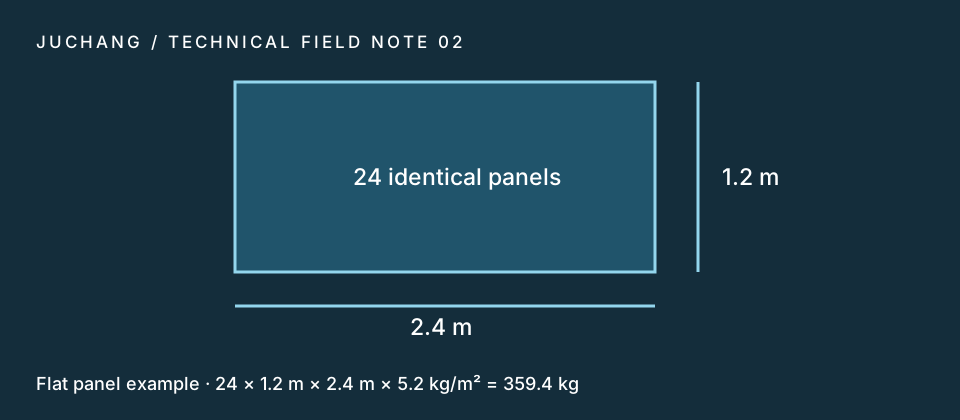
For 24 rectangular panels measuring 1.2 m by 2.4 m, net area is 24 × 1.2 × 2.4 = 69.12 m². At an illustrative 5.2 kg/m², the estimated flat panel mass is 359.4 kg. The example density is a calculation input, not a Juchang product value. For mixed sizes or build-ups, compute each line separately before adding the totals. Use the takeoff builder for the area and quantity, then multiply each applicable line by its verified mass per square meter.
Separate panel mass from shipment mass
Check whether returns, closures, inserts and stiffeners are included in the supplier figure. For an early logistics estimate, list any hardware, protective layers, separators and crate tare separately. Get gross weight and outside dimensions by crate before requesting a freight quote. Keep the shipment total separate from the facade dead load because the latter has its own scope and must include the installed components relevant to the project.
Resolve the assumptions before purchase
If the drawings include cutouts, ask whether the supplier reports purchased blank area or finished face area. Avoid deducting openings from the quoted weight if the figure already describes a finished part. Compare the estimate with an actual representative panel or a packing list when one becomes available. Put the intended use of the estimate on the sheet so procurement, transport and the engineer can each use the correct number.
Technical references
The sources describe general engineering considerations. Confirm product-specific values and project requirements with the responsible design team.