
FIELD NOTES / HONEYCOMB
Anodised Finishes on Honeycomb Panels for Exterior Use
An anodised honeycomb panel finish for exterior use is not a paint applied to a panel. It is an oxide layer grown out of the face skin itself, so the finish, the metal and the folded cassette all have to be specified together — and the sample has to prove more than a colour.
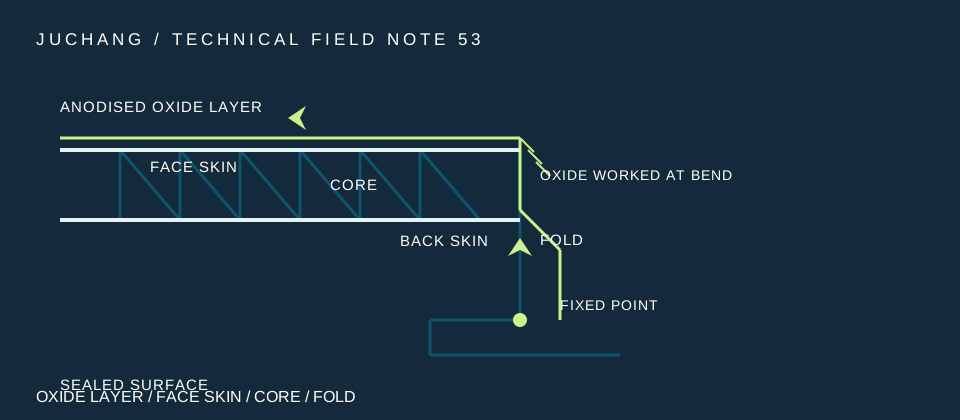
Anodising changes the surface, not the panel
Anodising is an electrochemical process that grows a layer of aluminium oxide out of the surface of the aluminium itself. The layer is part of the metal, not a film laid on top of it, which is why an anodised face keeps a metallic look that paint cannot imitate: light reaches the oxide and the metal beneath it, and the colour — whether clear, bronze, black or another dye — sits inside the oxide rather than on it. That distinction drives everything else in this guide. A finish that is part of the skin behaves like the skin: it follows the skin through the fold, it cannot be patched like paint, and its appearance depends on the alloy and temper underneath it.
The panel itself does not change. Anodising the face skin does not alter the honeycomb core, the adhesive bond, the panel depth or the fixing arrangement, so it adds nothing to stiffness and takes nothing from it. What it changes is the surface the weather meets, and the surface the eye reads. The questions to settle first are about the skin: its alloy and temper, its thickness, and whether it is anodised before or after the panel is made.
The sequence matters. A finished honeycomb cassette — skins bonded to a core — cannot simply be lowered into an anodising bath, because the bath chemistry and the process would attack the adhesive and the core. In practice the face skin is anodised as flat sheet, and the anodised sheet is then bonded and folded into the cassette, so the oxide is already on the metal when the returns are folded.
What to specify on the drawing
A specification that says only "anodised finish" has specified almost nothing. The drawing and the specification should name the face skin alloy and temper, the anodised class or oxide-layer thickness the project requires, the colour and the dye system, whether the surface is sealed, and the appearance standard the finish will be judged against. Oxide thickness is described by class, and the class should be chosen for the exposure — a sheltered soffit and a south-facing facade in a coastal city do not ask the same thing of a finish. Confirm the class per project and per drawing.
Sealing deserves its own line. After anodising, the pores of the oxide layer are normally sealed, and the quality of that seal decides how the surface resists staining and how it holds its colour. An unsealed or poorly sealed surface can take up dirt and show handling marks that no amount of cleaning will lift evenly. Ask how the sealing is done and what evidence shows it was done — the supplier should be able to describe the process and the check, not just confirm that sealing is "included". The same applies to colour: anodised colour is judged against an approved sample, not against a colour chart, because the alloy, the bath and the dye all shift the result. State the sample that governs, and state how many panels the sample is expected to represent.
Then there is the fold. Folding an anodised sheet stretches the oxide on the outside of the bend, and the oxide — a hard, brittle ceramic layer on a ductile metal — can craze or crack finely at the fold line. On a cassette that fold is the most visible edge of the panel and the first place weather reaches. The specification should say how the fold is to be treated and what is acceptable there: whether the return is folded from the anodised sheet and the crazing accepted, whether the fold area is masked or treated differently, or whether the return is formed another way. This is a project decision, made with a folded sample in hand — not a detail to discover on the first delivered crate. Confirm the treatment per project and record it on the approved sample.
How an anodised honeycomb panel finish weathers outdoors
Left alone, an anodised surface weathers slowly and evenly. The oxide is stable in sunlight, so a clear anodised face tends to keep its metallic tone and soften towards a pale grey over years of exposure, rather than peeling or flaking the way a failed coating can. Dyed colours are less forgiving: the dye inside the oxide can fade under strong ultraviolet light, and the rate depends on the dye system, the sealing and the orientation of the elevation. A north-facing wall and a south-facing wall on the same building can age differently, which is why a single small sample viewed indoors says little about a facade. Judge colour and weathering on samples viewed outdoors, in daylight, at the angle the facade will actually be seen from.
Dirt and water leave their own record. An anodised surface that is properly sealed sheds rain reasonably well, but horizontal ledges, sills and the sheltered strip under a deep reveal collect dust and pollution, and the contrast between washed and unwashed areas can become the most visible feature of the elevation. In coastal or industrial air the question sharpens: chlorides and airborne chemicals can attack the oxide, particularly where water stands or where the surface was damaged. The specification should name the exposure honestly — coastal, urban, industrial — and ask the supplier what the finish needs in that environment, including the cleaning interval the finish is expected to tolerate.
Damage is the other weathering question, and it has an uncomfortable answer: an anodised surface generally cannot be touched up in the field the way a painted surface can. A scratch through the oxide exposes bare aluminium, and there is no brush-applied product that restores the anodised layer. The remedies are a replacement panel, a refinished skin, or living with the mark. That should be written into the maintenance thinking from the start — spares held in the same finish lot, a cleaning method that does not abrade the oxide, and handling rules that keep the face protected until the panel is fixed. The finish is durable, but its durability assumes it is not damaged, and the project should plan for the day a panel is.
What the sample must prove
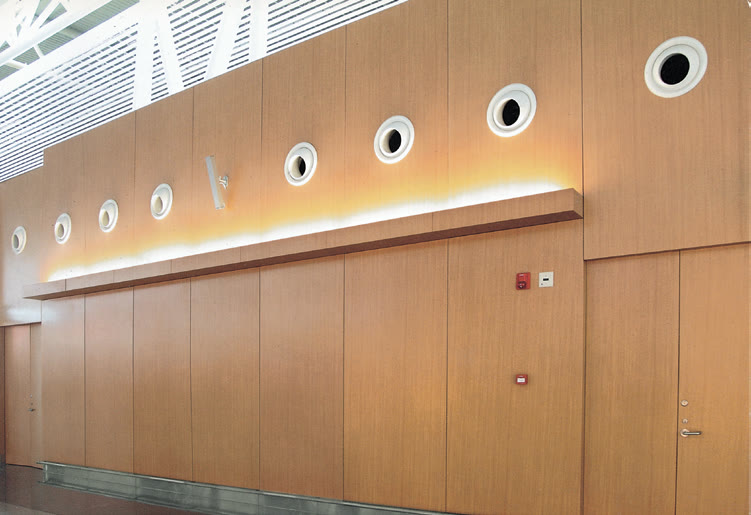
A sample for an anodised finish should answer five questions, and a sample that answers only the first is not enough. First, the colour: does it match the intent, viewed outdoors in daylight next to the other materials of the elevation? Second, the metal: is it the same alloy and temper as the production skin, from the same anodising line, so that the colour and texture will repeat? Third, the fold: does the sample include a folded return, so the crazing at the bend and the treatment of the edge can be seen and accepted before production? Fourth, the surface: is the sealing evident — does water sheet off evenly, and does a handling mark wipe away without leaving a pale patch? Fifth, the batch: how much variation between panels is acceptable, and how will the supplier control it across the order?
Size matters more than it seems. A small swatch hides the variation that a full panel shows: the way the oxide reads across a wide sheet, the direction of any grain in the metal, and the difference between one anodising batch and the next. Ask for a sample large enough to show the face at something close to its real scale, with a folded edge, and keep it as the reference — labelled with the alloy, the anodising class, the dye, the sealing method and the date, and stored where it will not be scratched or faded before the panels arrive.
Illustrative example only — the project values come from the project specification: consider an elevation where the architect approves a bronze anodised sample viewed in a showroom, and the first panels arrive a shade lighter on the south face. The difference is not a defect in the panel until the approved sample, the viewing conditions and the acceptable variation are compared. The example is a way to practise the check: record the sample, the light it was judged in, and the tolerance the project will accept, before the order is placed.
Questions to ask before the finish is approved
Before the finish is signed off, put these questions to the supplier in writing and keep the answers with the approved sample. At which stage is the face skin anodised, and how are the folded returns treated? What anodised class and oxide thickness does the project require, and what evidence — process record or test — supports it? How is the oxide sealed, and how is the seal checked? What is the colour tolerance, and how many panels does the approved sample represent? How is batch variation controlled across the order, and how are panels sequenced on the elevation so that neighbours come from the same batch? What cleaning method and interval does the finish need in this exposure, and what happens when a panel is scratched — is the remedy a replacement, and are spares held?
Two answers should give pause. If the supplier cannot say how the fold is treated, the edge of every panel is an open question. If the only evidence for the finish is a colour chart or a small swatch, the project has approved a colour, not a finish. Anodising is a finish that rewards a careful specification and punishes a vague one, because the surface it makes is the metal itself. Get the specification, the sample and the fold right, and the facade will keep its metallic character for years; leave any of the three to assumption, and the first thing the weather shows will be the gap in the paperwork.
Technical references
The sources describe general engineering considerations. Confirm product-specific values and project requirements with the responsible design team.